Technical Blog
Deep dives into AI engineering, reliability, mathematical structures, music, and lessons from production systems.
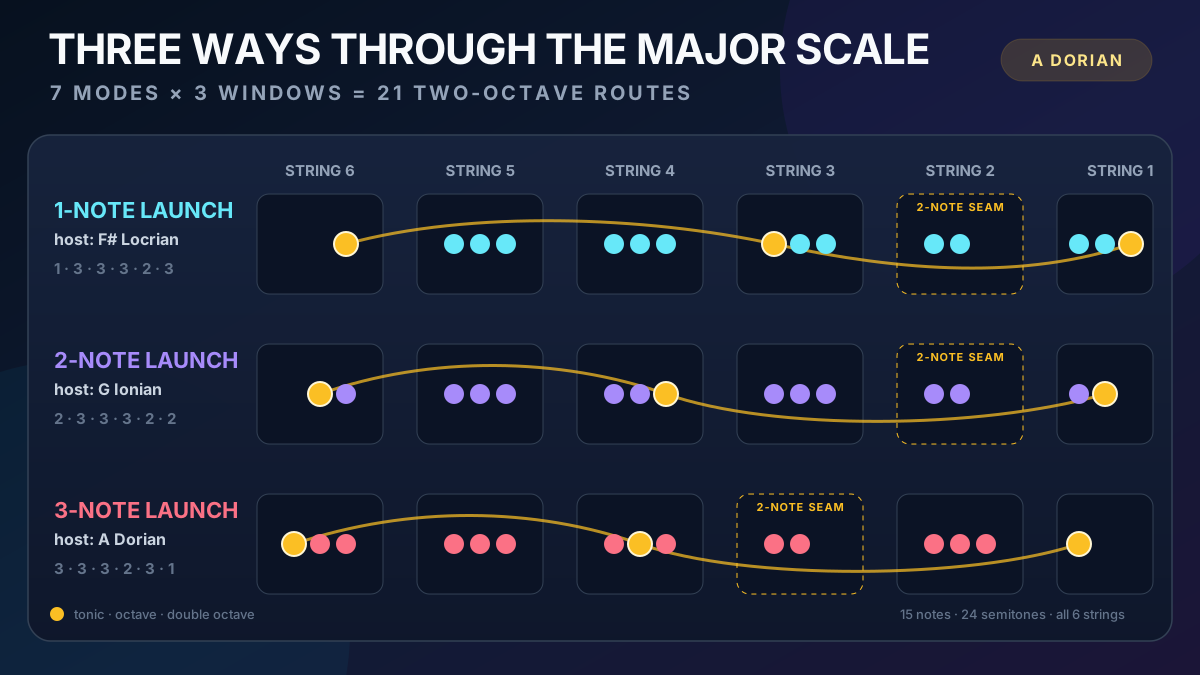
Three Ways Through the Major Scale
Seven Modes, Three Windows, Twenty-One Routes
Each 17-note major-scale box contains three overlapping two-octave routes. Follow the one-, two-, and three-note launches through all seven modal tonics and the familiar box system opens into a 7×3 map of the fretboard.
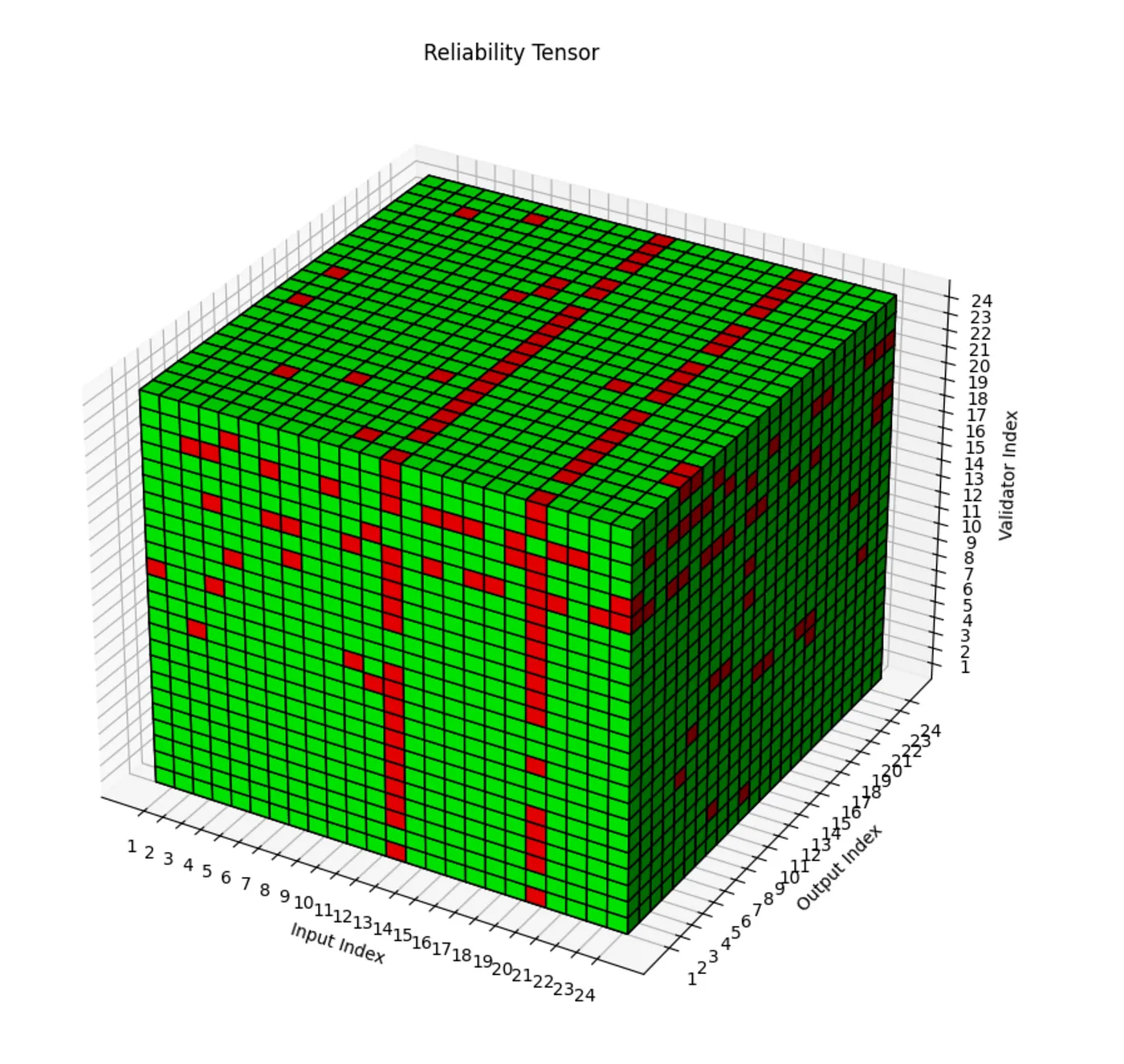
Reliability Testing for LLM-Based Systems
The CAT Framework White Paper
Comprehensive framework for conducting reliability tests on LLM systems using validators, verifiers, and reliability tensors. Includes binomial experiments, generative conditional validators, and production monitoring strategies.
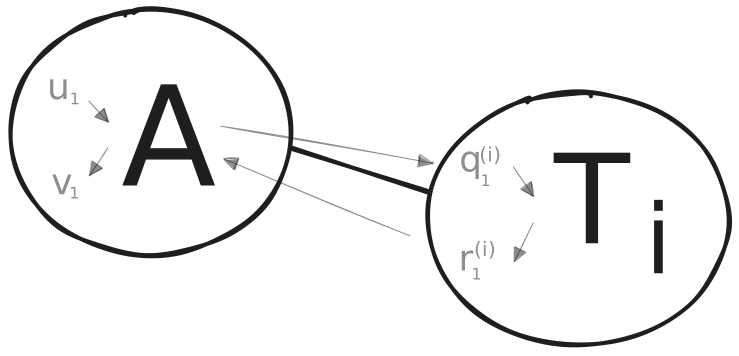
Agentic Architecture
Structuring Agent-Tool-User Interactions
A structured approach to modeling interactions between agents and tools through chat histories, cycles, and graph-theoretic representations. Foundational concepts for understanding agentic AI systems.
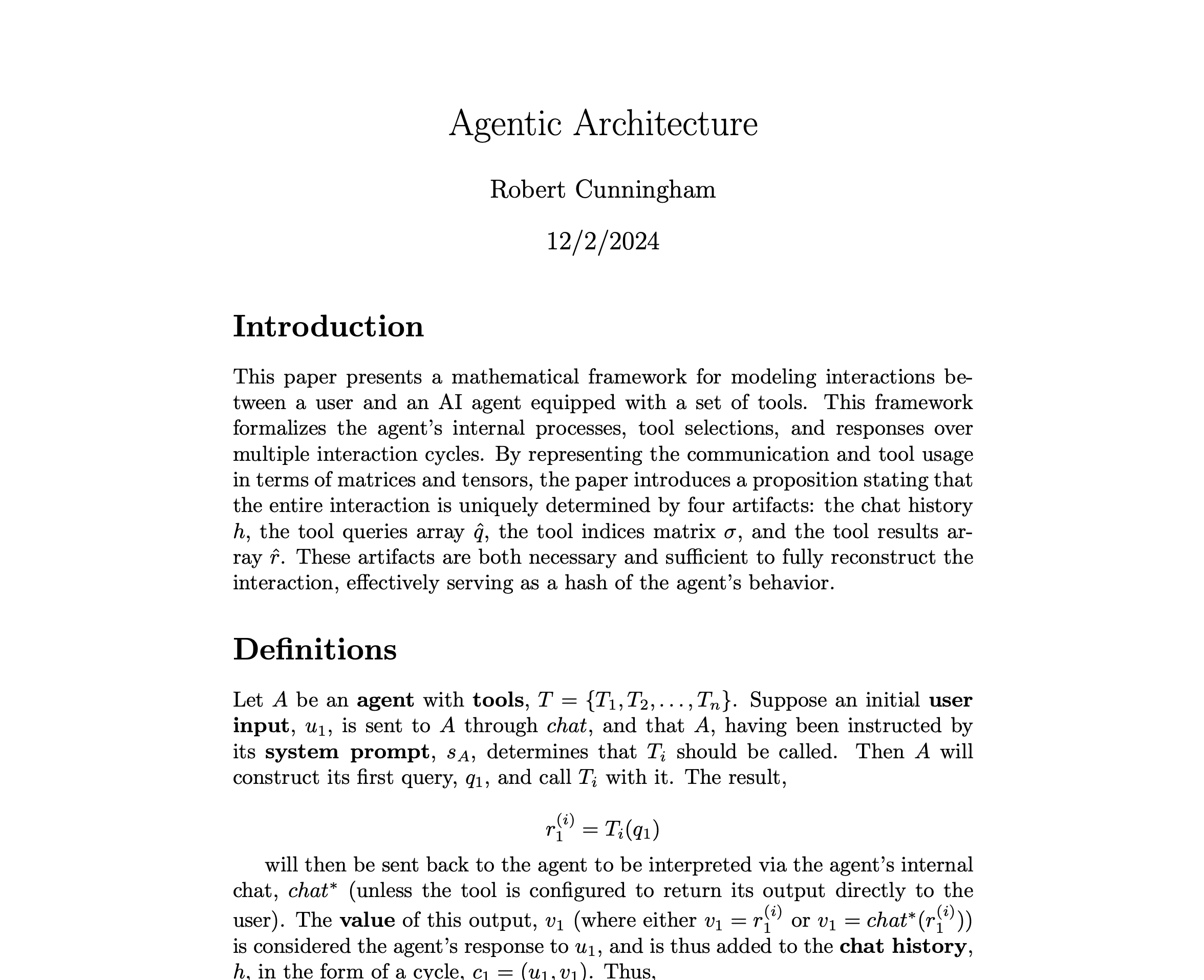
Formalized Structures: The Algebra of Agentic Architectures
Mathematical Formalization of Tool-Using AI Systems
Mathematical formalization of agentic AI through tool call matrices, selection masks, and tensor operations. Defines the algebra underlying agent-tool interactions with formal propositions and proofs.
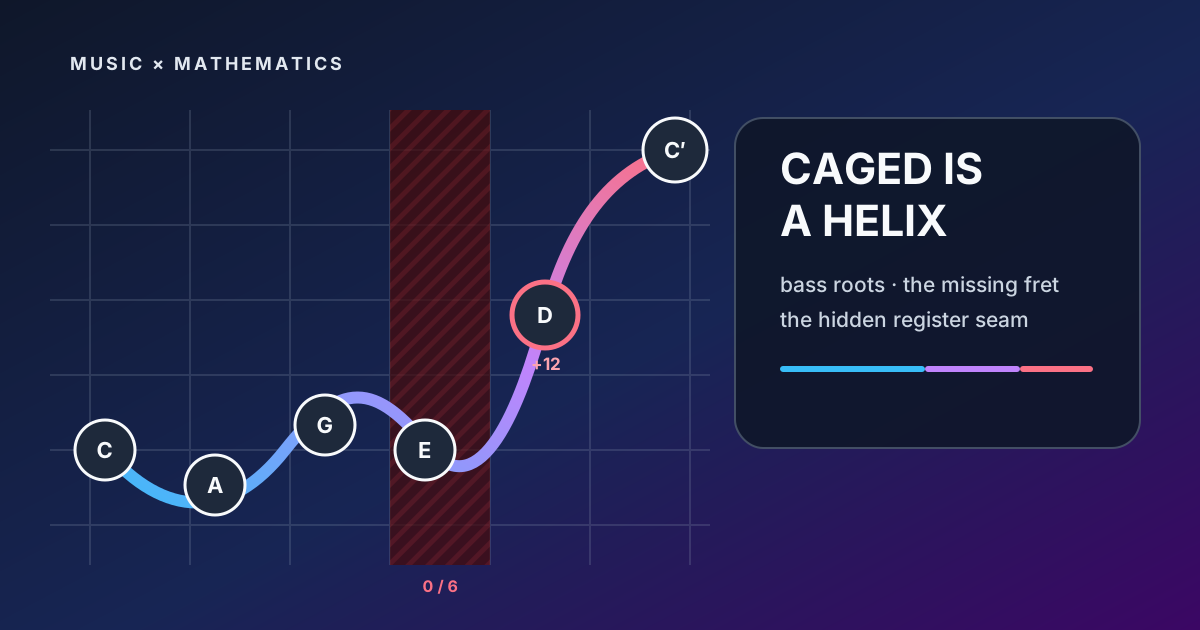
CAGED Is a Helix
Bass Roots, the Missing Fret, and the Hidden Register Seam
CAGED closes into a circle only after register is forgotten. Track absolute pitch and the D form reveals an octave jump, a literal zero-density fret, and a helix winding through overlapping triad neighborhoods.
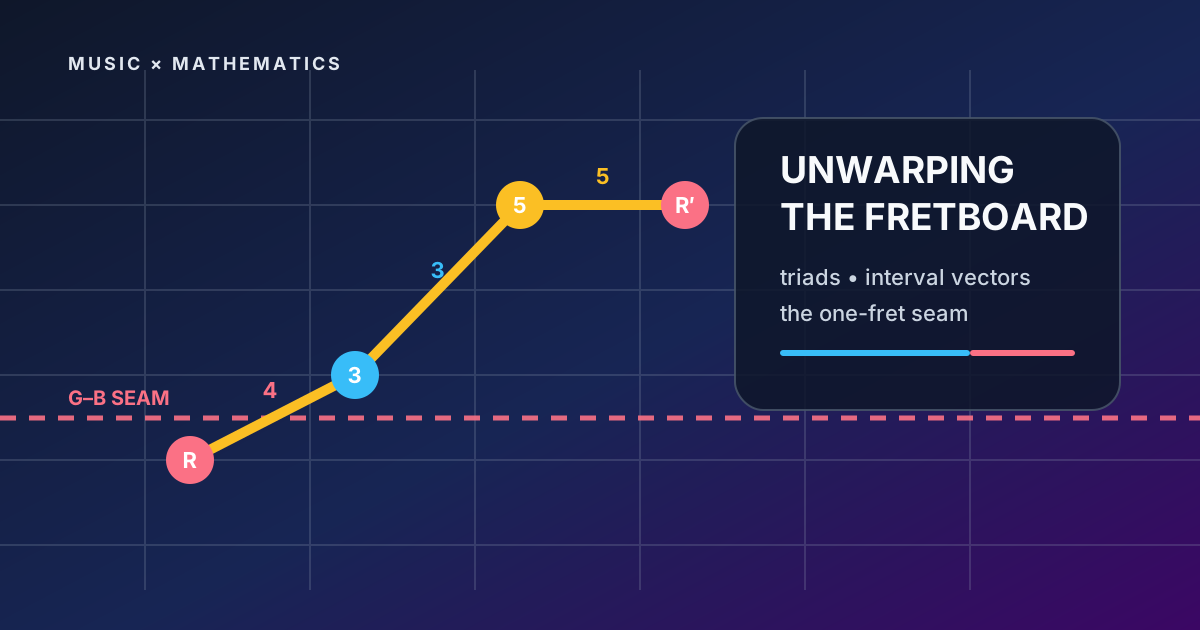
Unwarping the Fretboard
Triads, Interval Vectors, and the One-Fret Seam
A major triad is the cyclic interval word 4–3–5. Unwarp the G–B seam and its inversions become translations again—three chord-tone steps that add up to an octave-lattice generator.
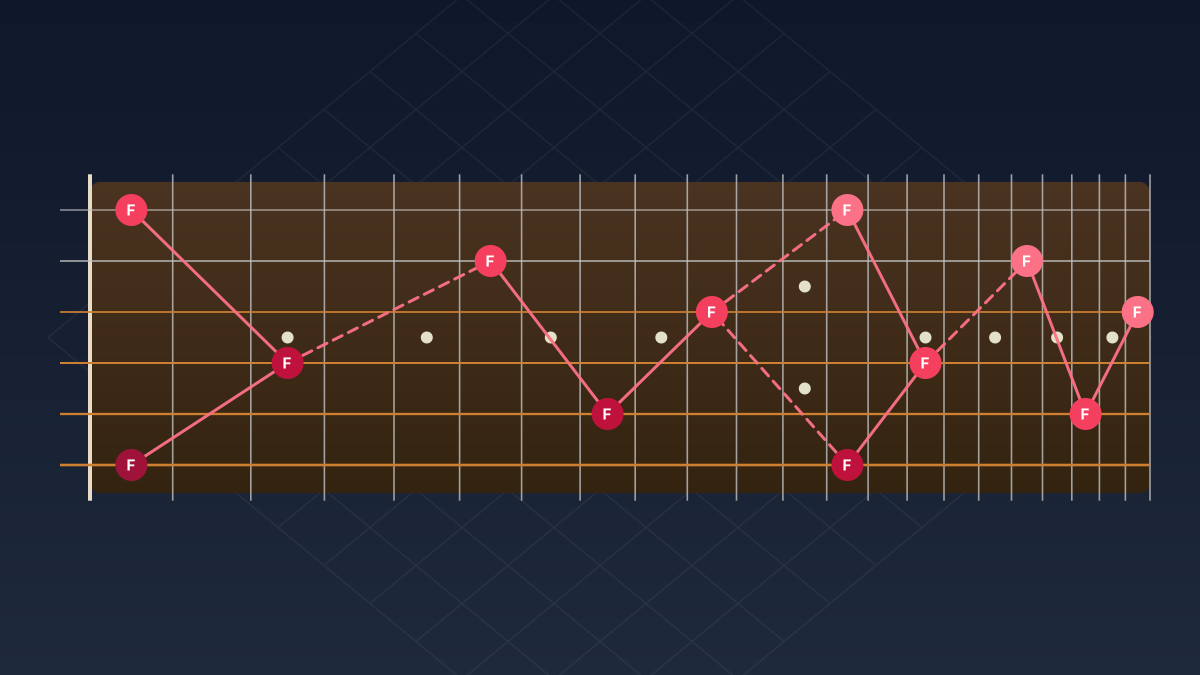
The Octave Lattice
Why a Guitar Fretboard Is Secretly the Integer Grid
Every octave shape on a guitar is a vector, and the two compact ones form a unimodular basis—so the tangled octave map on the fretboard is, up to a change of basis, the integer grid ℤ². A graph-theoretic tour of the neck, and why the B-string wrinkle is invisible to the math.